Amber
“Fossilized tree resin preserving ancient life”
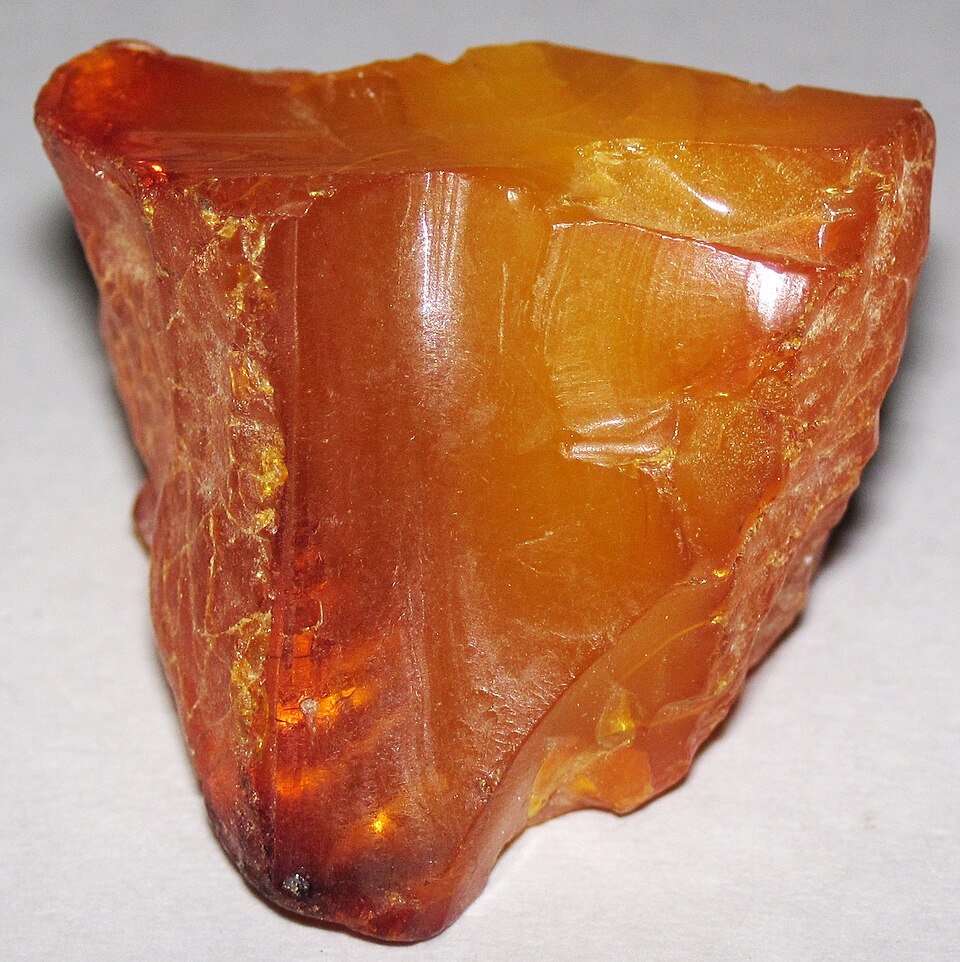
Amber is fossilized tree resin that polymerized and hardened over millions of years, transforming from sticky sap into a translucent golden-brown organic gemstone. It's prized both for its beauty and for its extraordinary ability to preserve organisms — insects, spiders, feathers, and even small lizards — trapped in the original resin.
polymerized organic compounds (terpenoids), succinic acid (in Baltic amber), sulfur, trace plant material
Baltic coast (Poland, Lithuania, Russia — largest deposit), Dominican Republic, Myanmar (Burmese amber), Mexico, New Jersey (USA), Lebanon
2-2.5
Burmese amber from Myanmar contains specimens dating to 99 million years ago — including a dinosaur tail with feathers, the oldest known bee, and an ancient frog, providing an unparalleled window into mid-Cretaceous ecosystems.
Test Your Knowledge
What chemical process transforms fresh tree resin into amber over geological time?
Photo Attribution
Related Specimens


Want to identify rocks yourself?