Calc-silicate Hornfels
“Baked limestone transformed”
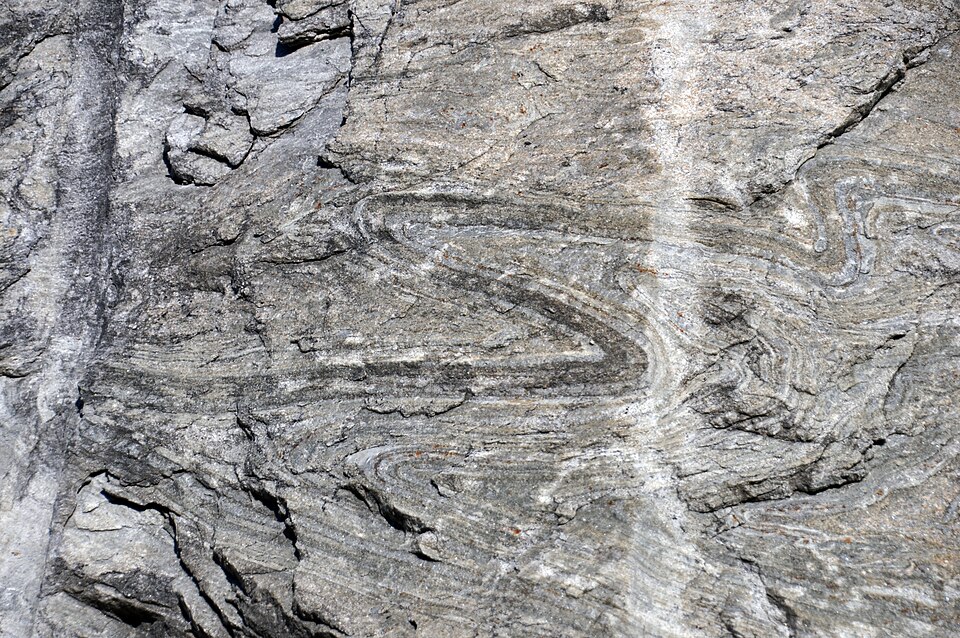
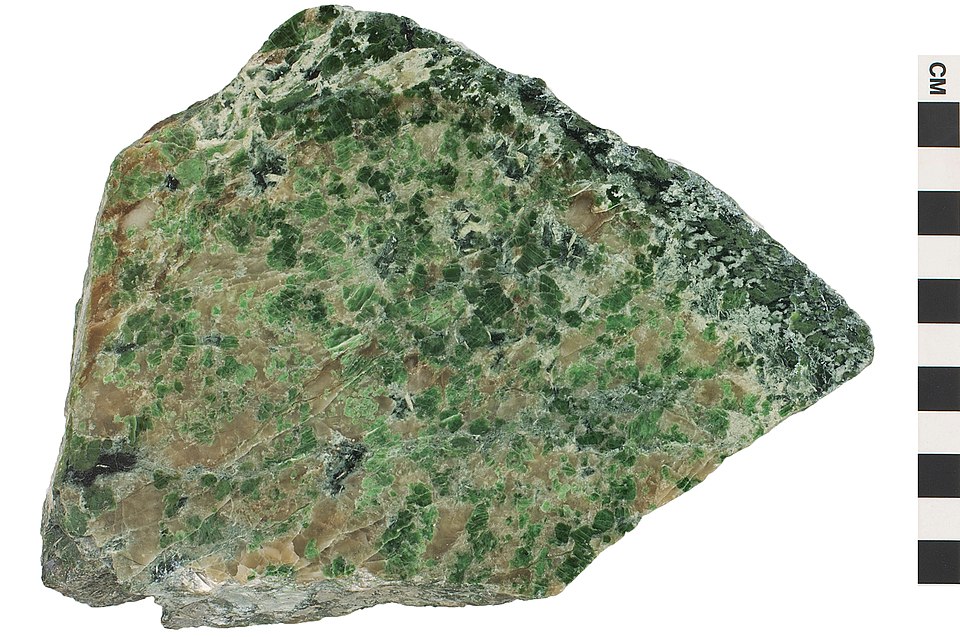
Calc-silicate hornfels forms when impure limestone or dolostone is baked by contact with hot magma, causing the calcite and silicate impurities to react and form an entirely new assemblage of calcium-rich minerals. The result is a hard, dense, fine-grained rock often displaying bands of different colors.
diopside, wollastonite, garnet (grossular), calcite, quartz, vesuvianite
Skye (Scotland), Christmas Mountains (Texas, USA), Oslo region (Norway), Adamello (Italy), Japan
6-7
Calc-silicate hornfels can fluoresce brilliantly under ultraviolet light due to minerals like wollastonite and calcite, turning ordinary-looking rocks into glowing works of art.
Test Your Knowledge
Why do calc-silicate hornfels specimens sometimes fluoresce brilliantly under ultraviolet light?
Photo Attribution
Author: James St. John
License: CC BY 2.0
Related Specimens
Want to identify rocks yourself?