Concretion (Carbonate)
“Stone balls grown inside sediment”
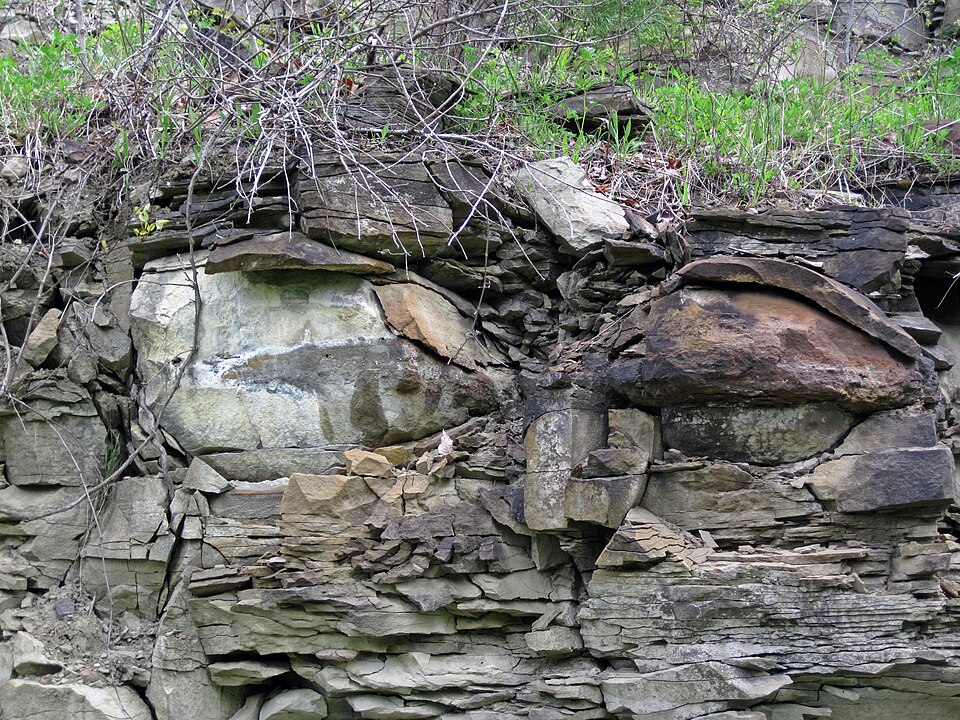
Carbonate concretions are rounded, often spherical bodies of calcite or siderite cement that grew within sediment during early burial diagenesis. They form when carbonate minerals precipitate from pore fluids around a nucleus — often a fossil or organic fragment — producing hard, resistant bodies in otherwise soft sedimentary rock.
calcite or siderite cement, host sediment (clay, silt, sand), pyrite (common), fossil nuclei, septarian cracks (in some)
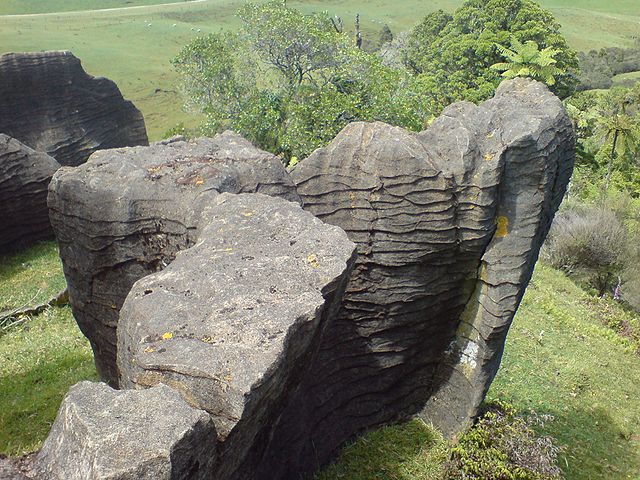
London Clay (England), Pierre Shale (South Dakota, USA), Moeraki Beach (New Zealand — famous boulders), Koutu Boulders (New Zealand), Kansas chalk formations
3-5
The perfectly spherical Moeraki Boulders on New Zealand's coast are carbonate concretions up to 2 meters across that took an estimated 4-5.5 million years to grow — they formed on the ancient sea floor and were later exposed by coastal erosion.
Test Your Knowledge
What does the presence of early diagenetic concretions in a mudstone tell us about the pore water chemistry shortly after deposition?
Photo Attribution
Related Specimens


Want to identify rocks yourself?