Dolocrete
“Dolomite cement grown in ancient soils”

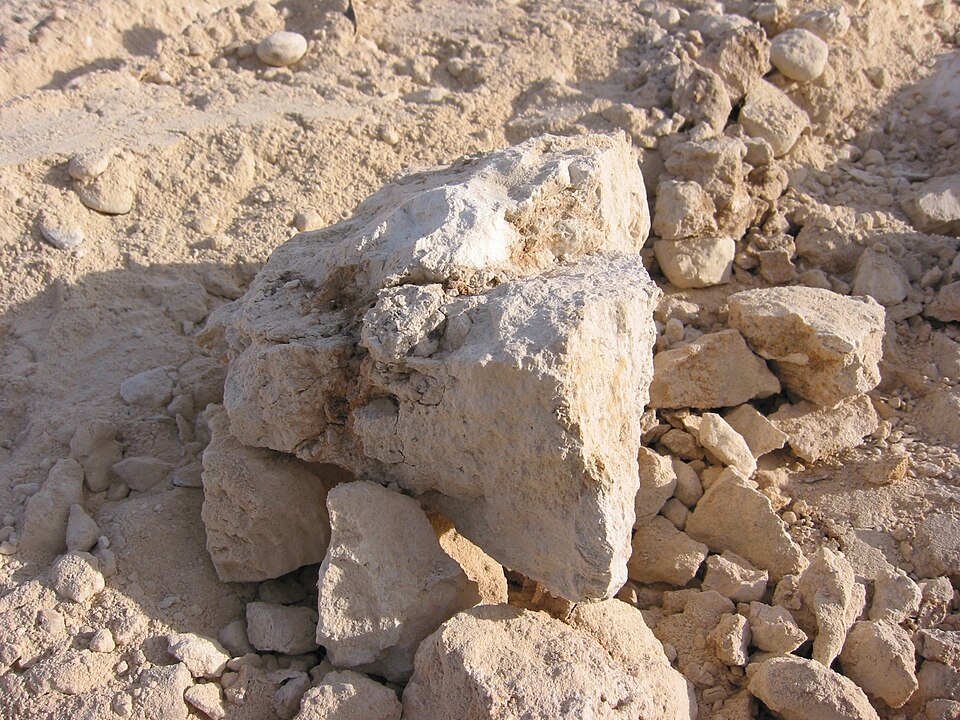
Dolocrete is a near-surface sedimentary deposit where dolomite rather than calcite forms the pedogenic (soil-formed) carbonate cement. It develops in arid to semi-arid environments with magnesium-rich groundwater and provides evidence of past climate conditions and groundwater chemistry.
dolomite (pedogenic), calcite, quartz sand, clay minerals, palygorskite, iron oxides
Kalahari (Botswana/Namibia), Etosha Pan (Namibia), Australian inland basins, Sahel (West Africa), Middle East
3-4
The presence of dolocrete rather than caliche (calcite-cemented) in ancient soil profiles tells geologists that groundwater was magnesium-rich — often indicating proximity to ultramafic rocks, evaporites, or coastal sabkha environments.
Test Your Knowledge
What groundwater chemistry condition is required to form dolocrete rather than the more common calcrete (calcite-cemented soil)?
Related Specimens

Want to identify rocks yourself?