Glaucophane Schist
“Blue amphibole from the subduction zone”
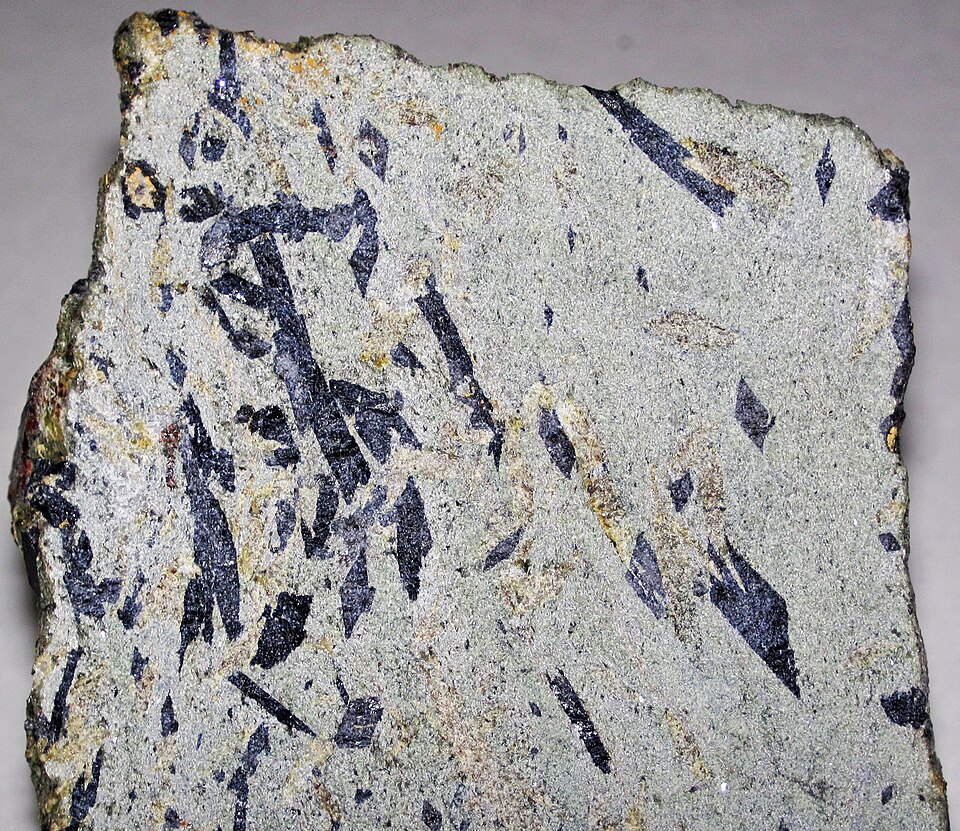
Glaucophane schist is a high-pressure, low-temperature metamorphic rock dominated by the blue amphibole mineral glaucophane. It forms exclusively in subduction zone settings where oceanic crust is dragged to depths of 15-50 km but stays relatively cool, and its vivid blue color makes it instantly recognizable.
glaucophane, lawsonite, epidote, phengite, garnet, jadeite (occasional)
Franciscan Complex (California, USA), Île de Groix (France), Cycladic Islands (Greece), Western Alps, Sanbagawa Belt (Japan)
5-6
Glaucophane schist is so diagnostic of ancient subduction zones that finding it in billion-year-old rocks is treated as strong evidence that plate tectonics was operating at that time.
Test Your Knowledge
What unusual combination of conditions is required to form glaucophane schist?
Related Specimens


Want to identify rocks yourself?