Jacupirangite
“Dark pyroxenite from alkaline complexes”
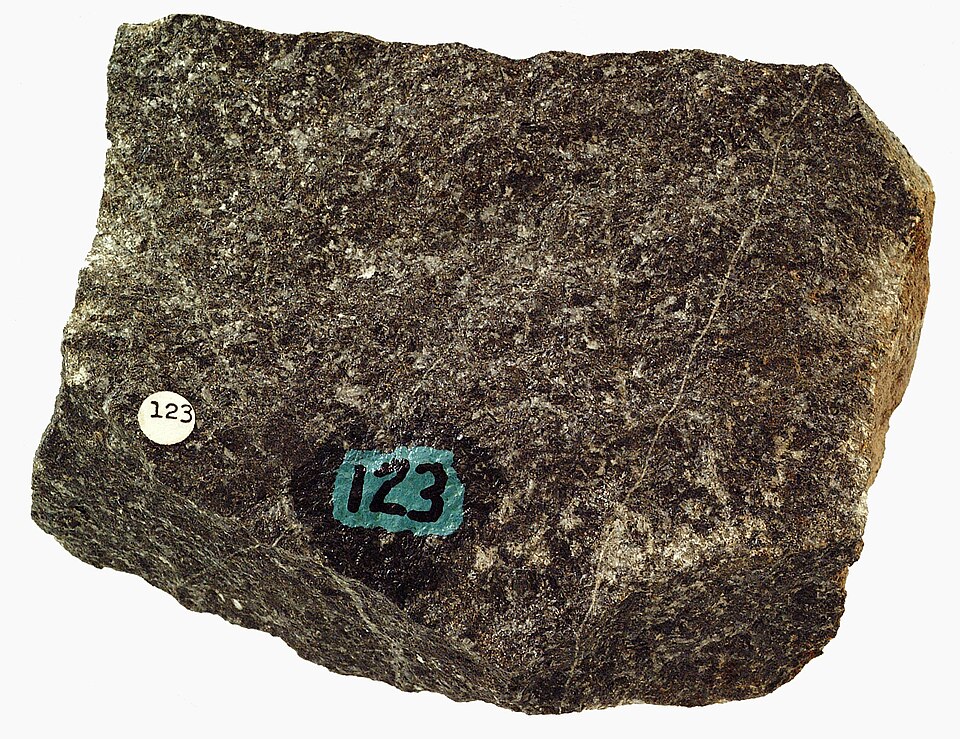
Jacupirangite is a dark, dense ultramafic rock composed almost entirely of titanium-rich augite (titanaugite), typically found in alkaline-carbonatite igneous complexes. It represents one of the earliest crystallization products of highly alkaline magmas and is often associated with economically important deposits.
titanaugite, magnetite, ilmenite, nepheline, perovskite, apatite
Jacupiranga (São Paulo, Brazil — type locality), Alnö (Sweden), Kola Peninsula (Russia), Fen Complex (Norway), Phalaborwa (South Africa)
5-6
The Jacupiranga complex in Brazil, where this rock was first described, is now a major phosphate mining center — the apatite concentrated in and around these dark rocks feeds Brazil's agricultural industry.
Test Your Knowledge
What type of igneous complex is jacupirangite most commonly associated with?
Related Specimens

Want to identify rocks yourself?