Manganese Nodule
“Deep-sea treasure growing millimeters per million years”
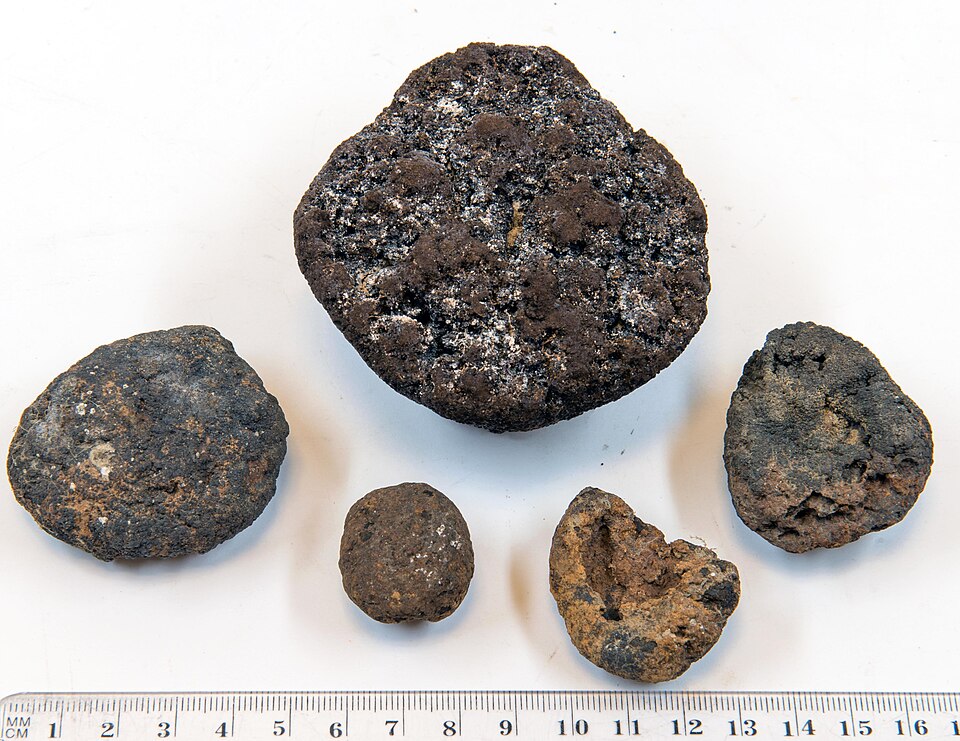
Manganese nodules are potato-sized concretions of manganese and iron oxides that litter vast areas of the deep ocean floor. They grow by precipitating dissolved metals from seawater at extraordinarily slow rates — just millimeters per million years — making them among the slowest-growing geological formations known.
todorokite, birnessite, vernadite, goethite, clay minerals, cobalt, nickel, copper
Clarion-Clipperton Zone (Pacific Ocean), Peru Basin, Indian Ocean nodule fields, Blake Plateau (Atlantic)
3-4
The Clarion-Clipperton Zone alone contains an estimated 21 billion tons of manganese nodules — more nickel, cobalt, and manganese than all known land-based reserves combined, sparking intense deep-sea mining debates.
Test Your Knowledge
Approximately how fast do deep-sea manganese nodules grow?
Related Specimens

Want to identify rocks yourself?