Migmatite (Metatexite)
“The rock that started to melt”
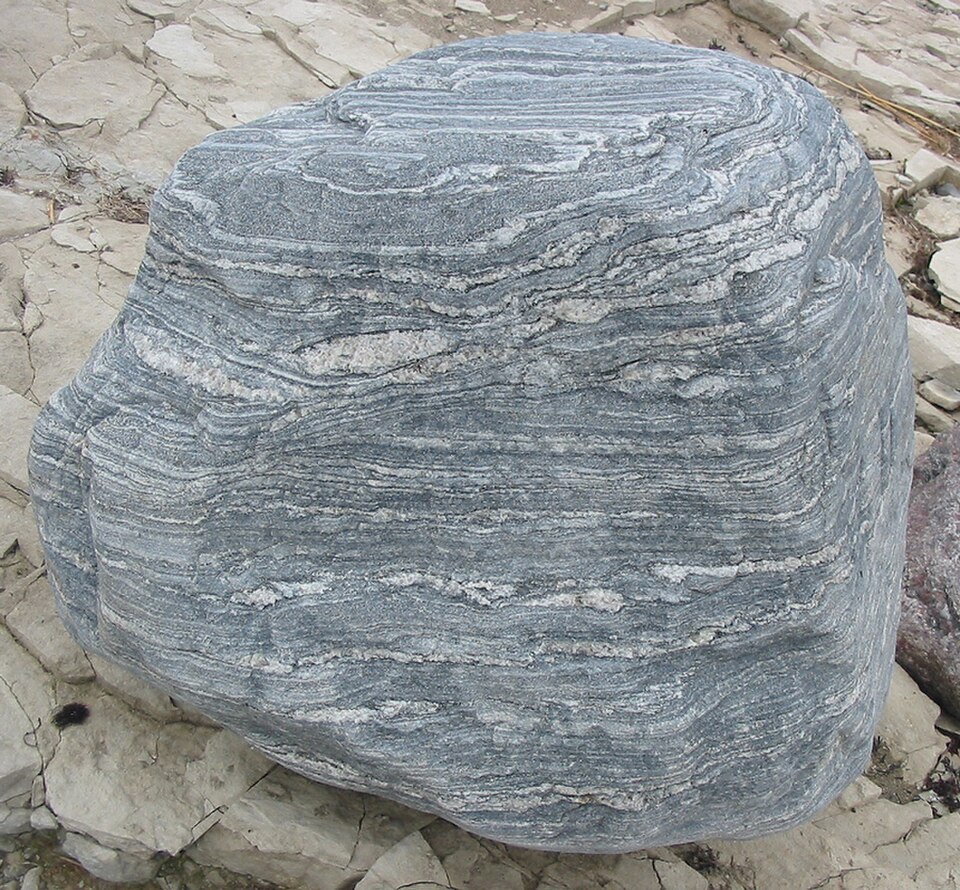
Metatexite migmatite is a partially melted metamorphic rock where thin veins and patches of light-colored granitic melt (leucosome) have segregated from the darker residual material (melanosome), while the original rock structure is still largely preserved. It represents the threshold between metamorphism and igneous processes.
leucosome: quartz, feldspar, muscovite, melanosome: biotite, garnet, sillimanite, hornblende, paleosome: varies with protolith
Finnish Lapland, Broken Hill (Australia), Black Forest (Germany), Muskoka (Ontario, Canada), Adirondacks (USA), Himalayan metamorphic core
6-7
Migmatites challenged geologists for over a century — the great 'granite controversy' debated whether these mixed rocks formed by melting (magmatic) or by chemical infusion without melting (metasomatic), a debate not fully resolved until experimental petrology in the mid-20th century.
Test Your Knowledge
What is the geological term for the light-colored, melt-derived component in a migmatite, and what does its composition tell us?
Photo Attribution
Related Specimens


Want to identify rocks yourself?