Oilsand (Tar Sand)
“Sand grains coated in heavy crude”
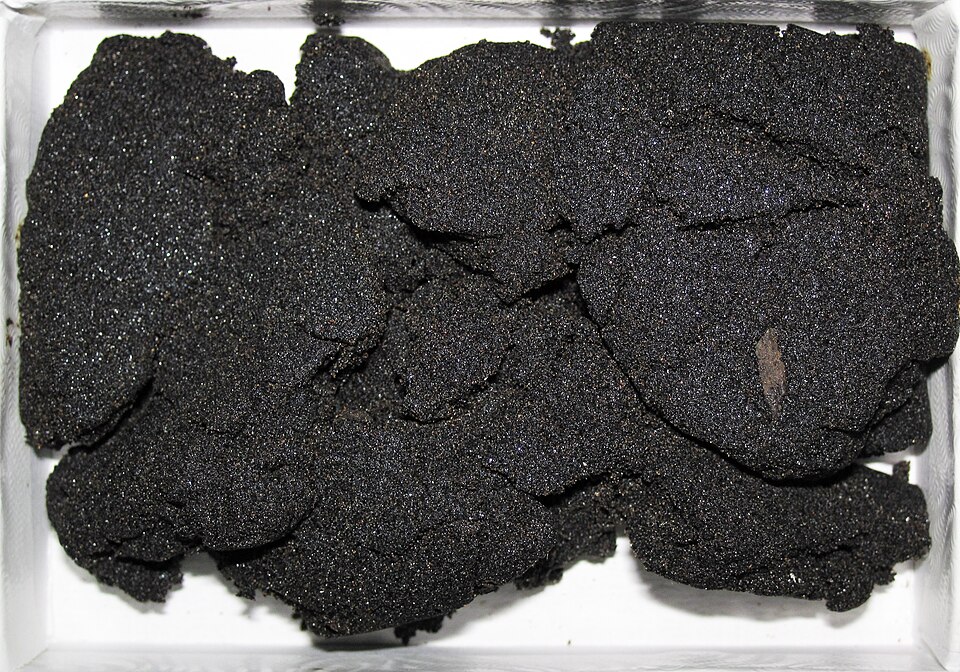
Oil sand (or tar sand) is an unconsolidated sandstone saturated with bitumen — extremely heavy, viscous petroleum that's too thick to flow naturally. Each sand grain is coated with a thin film of water and then a thicker film of bitumen, making extraction energy-intensive but yielding enormous volumes of oil.
quartz sand grains, bitumen (heavy petroleum), clay minerals, water film, pyrite (minor), heavy minerals
Athabasca (Alberta, Canada — world's largest deposit), Orinoco Belt (Venezuela), Olimane (Madagascar), Utah (USA), Karamay (China)
Variable (unconsolidated)
Canada's Athabasca oil sands contain an estimated 1.7 trillion barrels of bitumen — the third-largest oil reserve on Earth — but extracting and upgrading the heavy oil requires enough energy that the process generates significantly more CO₂ than conventional oil production.
Test Your Knowledge
What thin layer exists between the quartz sand grain and the bitumen coating in oil sands, and why is it geologically significant?
Photo Attribution
Title: Athabasca Tar Sand (near Fort McMurray, Alberta, Canada).jpg
Author: James St. John
License: CC BY 2.0
Related Specimens


Want to identify rocks yourself?