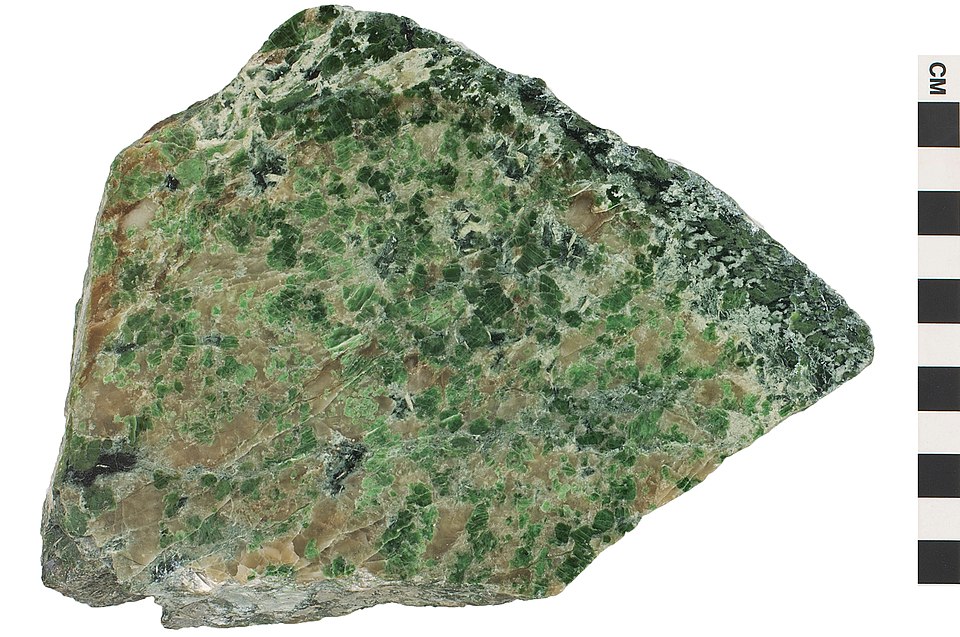
Prehnite-Pumpellyite Facies Rock
“The lowest grade of metamorphism”
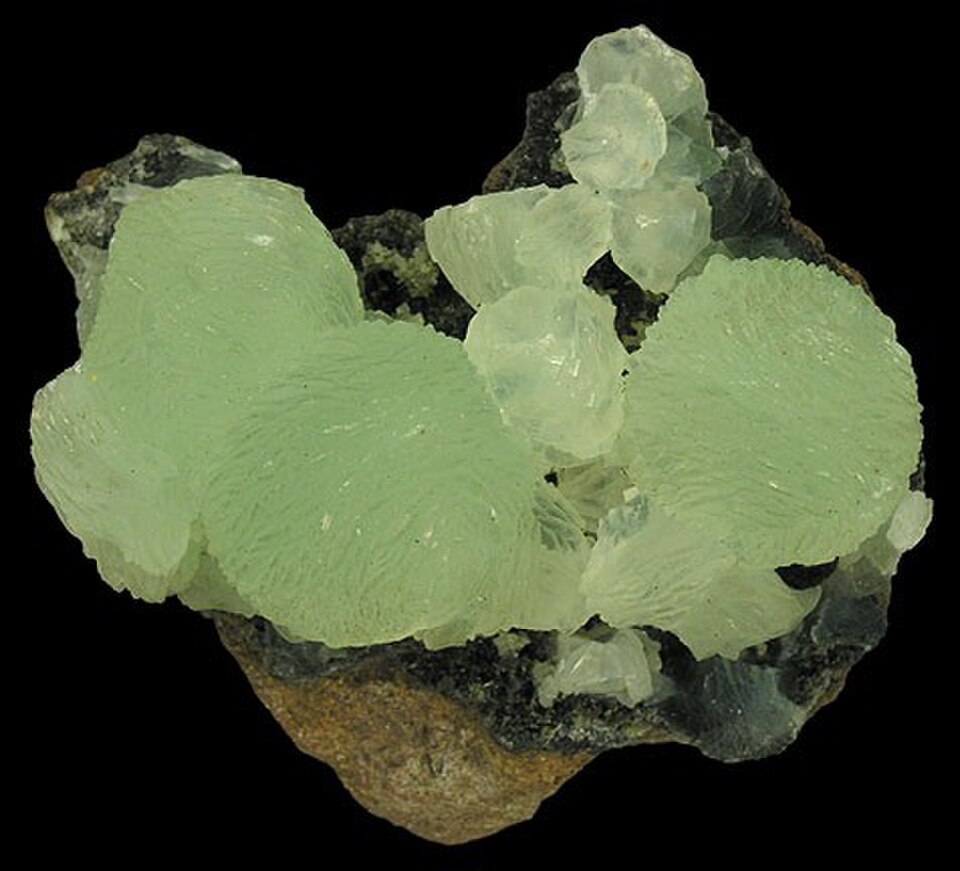
Prehnite-pumpellyite facies rocks represent the very lowest grade of metamorphism — the transition from diagenesis to true metamorphism at temperatures of roughly 200-300°C. The characteristic minerals prehnite and pumpellyite replace volcanic glass and unstable primary minerals while the rock still largely retains its original igneous textures.
prehnite, pumpellyite, chlorite, albite, quartz, titanite, epidote, relict volcanic textures
Southland (New Zealand — type area), Olympic Peninsula (Washington, USA), Karmøy (Norway), Taveyanne Formation (Swiss Alps), Chilean coastal range
4-6
The prehnite-pumpellyite facies was only formally recognized as a distinct metamorphic facies in 1961 by Douglas Coombs, who defined it from rocks in New Zealand — it filled a critical gap between unmetamorphosed sediments and the greenschist facies.
Test Your Knowledge
Where does the prehnite-pumpellyite facies sit in the hierarchy of metamorphic facies, and what does its mineral assemblage replace?
Related Specimens
Want to identify rocks yourself?