Pseudotachylyte
“Glass forged by earthquake friction”
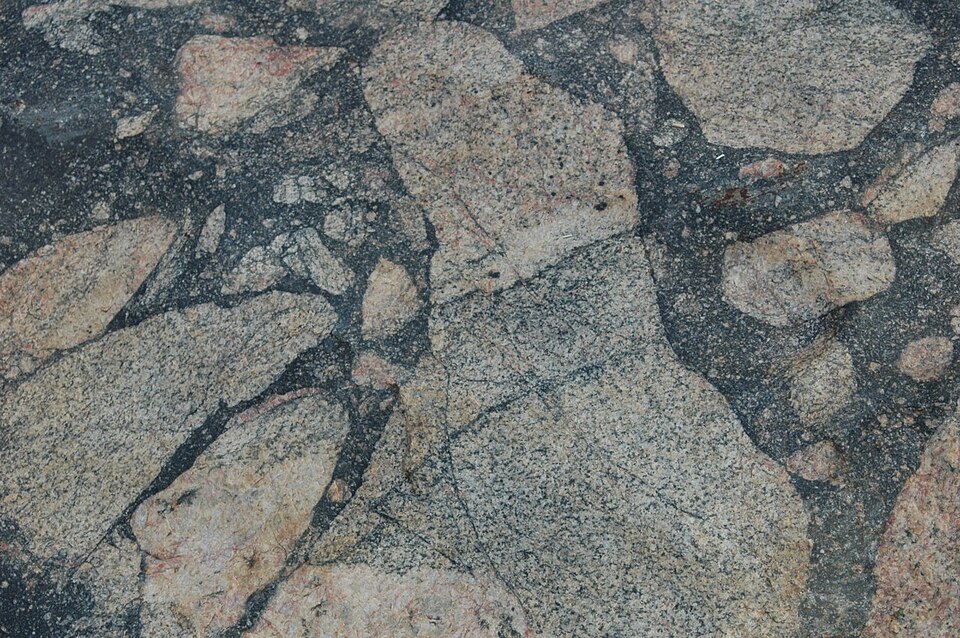
Pseudotachylyte is a rare, dark, glassy rock formed when frictional melting occurs along fault surfaces during earthquakes. The intense heat generated as rocks grind past each other at high speed momentarily melts the fault surface, and the melt quickly quenches to glass.
glassy matrix, rock fragments from wall rock, microlites of feldspar, pyroxene
Outer Hebrides (Scotland), Vredefort Crater (South Africa), Ivrea Zone (Italy), Musgrave Ranges (Australia)
5-7 (glassy)
Pseudotachylyte is essentially 'fossil earthquake' evidence — finding it proves that an ancient fault experienced violent, rapid slip events, possibly magnitude 7 or greater.
Test Your Knowledge
What makes pseudotachylyte a uniquely direct record of ancient earthquake activity?
Photo Attribution
Title: Pseudotachylite Breccia of Vredefort in South Africa.jpg
Author: Abri le Roux
License: CC BY 2.0
Related Specimens

Want to identify rocks yourself?