Septarian Nodule
“Cracked mud ball filled with crystals”
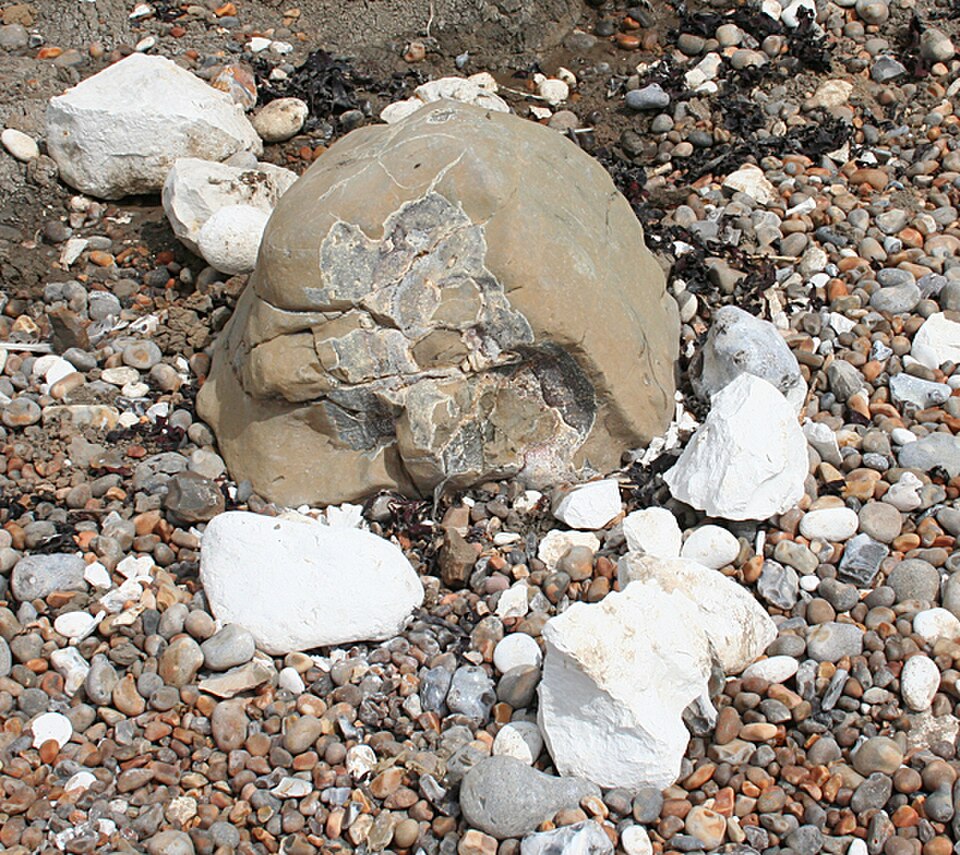
Septarian nodules are concretions that formed in ancient sea floor mud, then cracked internally as they dried and shrank. Over time, minerals like calcite, aragonite, and barite filled the angular cracks, creating dramatic internal patterns that are revealed when the nodules are cut open and polished.
calcite, aragonite, barite, limestone mud matrix, siderite
Southern Utah (USA), Madagascar, New Zealand, England (Jurassic coast), Morocco
3-4
When cut and polished, septarian nodules are called 'dragon stone' because their angular pattern of brown, yellow, and gray sections resembles dragon scales or turtle shells.
Test Your Knowledge
What causes the distinctive internal cracking pattern that gives septarian nodules their 'dragon stone' appearance?
Photo Attribution
Related Specimens

Want to identify rocks yourself?