Smithsonite
“The zinc carbonate chameleon”
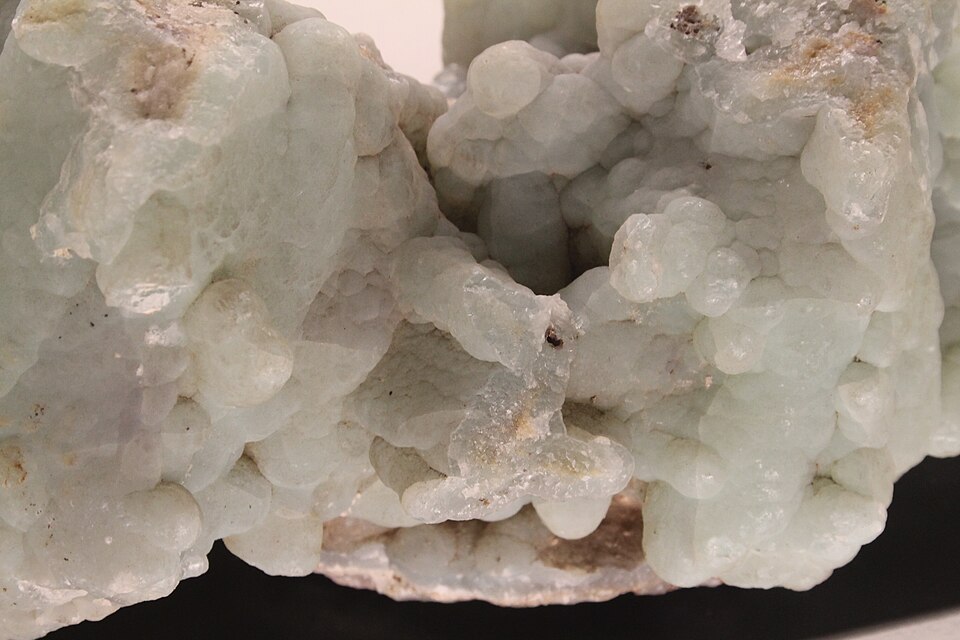
Smithsonite is a zinc carbonate mineral that forms in the oxidation zones of zinc ore deposits, occurring in a remarkable range of colors including blue, green, pink, yellow, and lavender. It's named after James Smithson, the British mineralogist whose bequest founded the Smithsonian Institution.
zinc carbonate (ZnCO₃)
Kelly Mine (New Mexico, USA), Tsumeb (Namibia), Broken Hill (Zambia), Laurion (Greece), Sardinia (Italy)
4-4.5
James Smithson, who smithsonite is named after, never visited America — yet his fortune and mineral collection founded the Smithsonian Institution, now the world's largest museum complex.
Test Your Knowledge
What is the connection between the mineral smithsonite and the Smithsonian Institution?
Photo Attribution
Related Specimens


Want to identify rocks yourself?