Turbidite
“Graded layers from underwater avalanches”
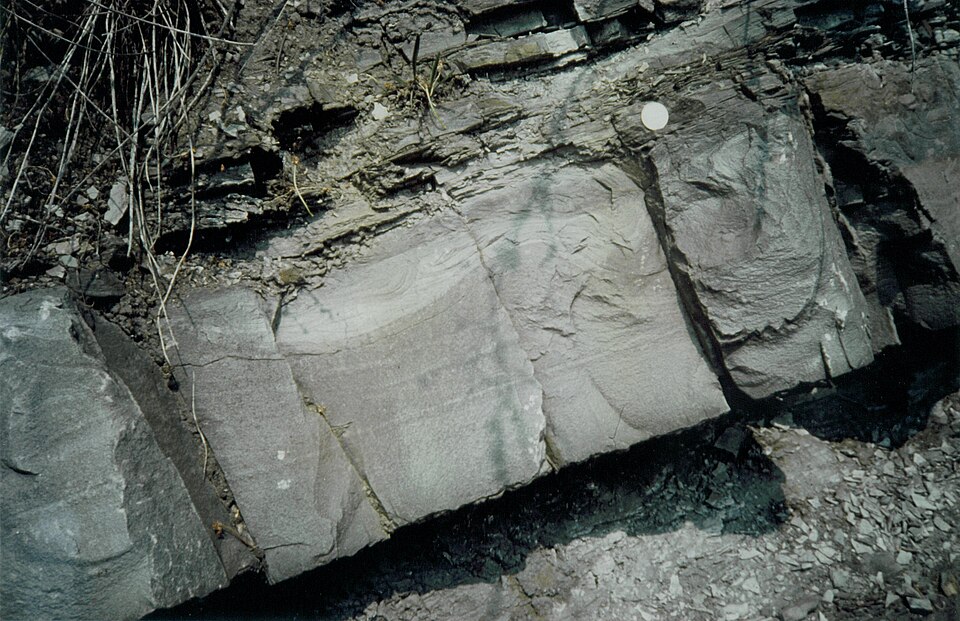
Turbidite is a sedimentary deposit formed by turbidity currents — dense, fast-moving underwater flows of sediment-laden water that rush down continental slopes. Each event deposits a graded layer called a Bouma sequence, with coarse sand at the bottom fining upward to mud at the top.
quartz, feldspar, clay minerals, calcite, rock fragments, mica
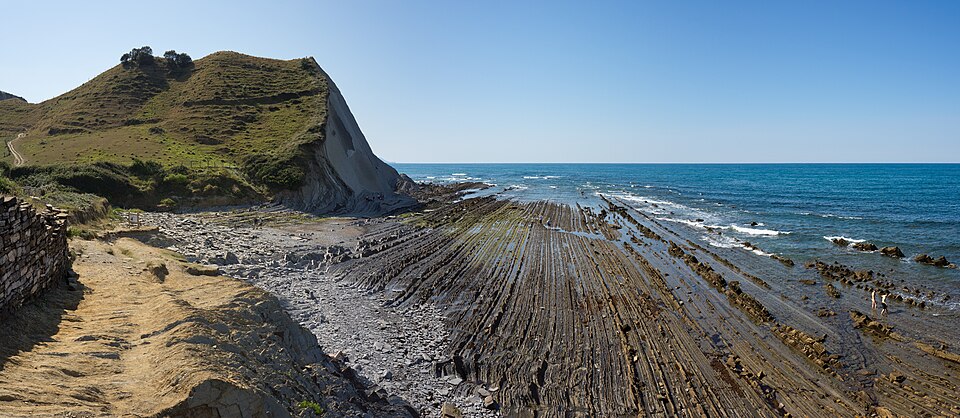
Apennines (Italy — classic Bouma sequences), Bengal Fan (Indian Ocean), Basque Coast (Spain), Monterey (California, USA)
3-6 (varies by layer)
The 1929 Grand Banks earthquake off Newfoundland triggered a turbidity current that snapped undersea telegraph cables in sequence, allowing scientists to clock the flow at over 65 km/h.
Test Your Knowledge
In a single turbidite bed, where would you find the coarsest grains?
Related Specimens

Want to identify rocks yourself?