Blueschist Facies Marble
“Marble from the cold depths of subduction”
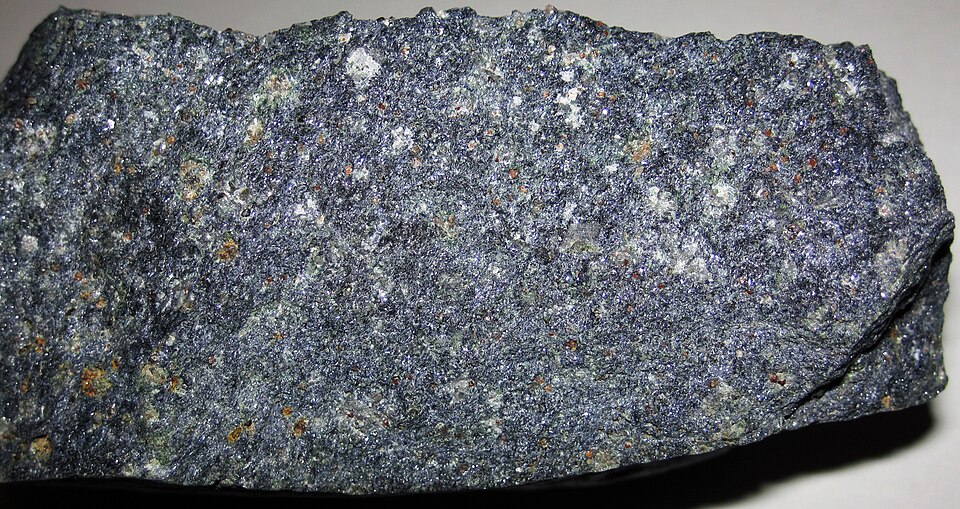
Blueschist facies marble is a rare variety of marble that was metamorphosed under the high-pressure, low-temperature conditions of a subduction zone. It contains aragonite (the high-pressure polymorph of calcite) rather than the typical calcite of most marbles, recording its unusual journey to great depth and back.
aragonite (high-pressure CaCO₃), dolomite, phengite, lawsonite, glaucophane (in impure varieties), graphite
Syros and Tinos (Cycladic Islands, Greece), Franciscan Complex (California, USA), New Caledonia, Alpine Corsica (France)
3-3.5
Aragonite marble from Syros, Greece is one of the rare cases where the high-pressure CaCO₃ polymorph survived the return trip to the surface — in most cases, aragonite reverts to calcite during exhumation, erasing the evidence of deep burial.
Test Your Knowledge
Why is the preservation of aragonite instead of calcite in blueschist facies marble geologically remarkable?
Photo Attribution
Title: Blueschist (Porter Creek, Sonoma County, California, USA) 3.jpg
Author: James St. John
License: CC BY 2.0
Related Specimens



Want to identify rocks yourself?