Peraluminous Leucogranite
“Himalayan granite born from continental collision”

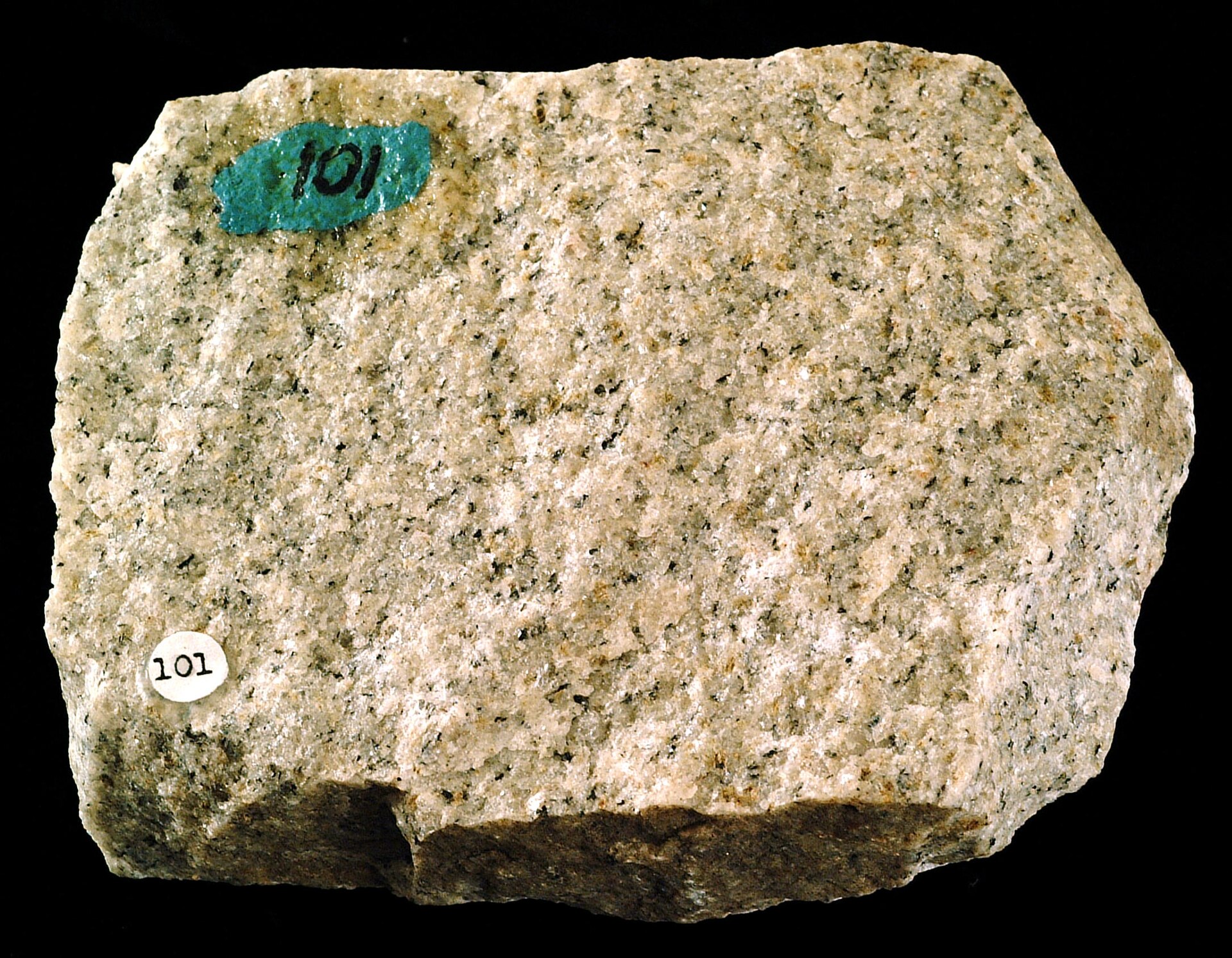
Peraluminous leucogranite is a light-colored, muscovite- and tourmaline-bearing granite with excess alumina relative to alkalis. It forms by partial melting of metasedimentary rocks during continental collision, making it a hallmark of the world's great collisional mountain belts, particularly the Himalayas.
quartz, alkali feldspar, plagioclase, muscovite, tourmaline, garnet, sillimanite (restite)
Higher Himalaya (Nepal, Bhutan, Tibet), Variscan belt (France, Spain), Lachlan Fold Belt (Australia), Appalachians (USA), Cornwall (England)
6-7
The Himalayan leucogranites were generated when India's collision with Asia thickened the crust so much that the deeply buried sedimentary rocks exceeded their melting point — these granites are literally the molten guts of the growing mountain belt.
Test Your Knowledge
What does the presence of muscovite and tourmaline (rather than hornblende) in a leucogranite indicate about its source rock?
Related Specimens

Want to identify rocks yourself?