Phyllonite
“Mica-rich fault rock with a silky sheen”
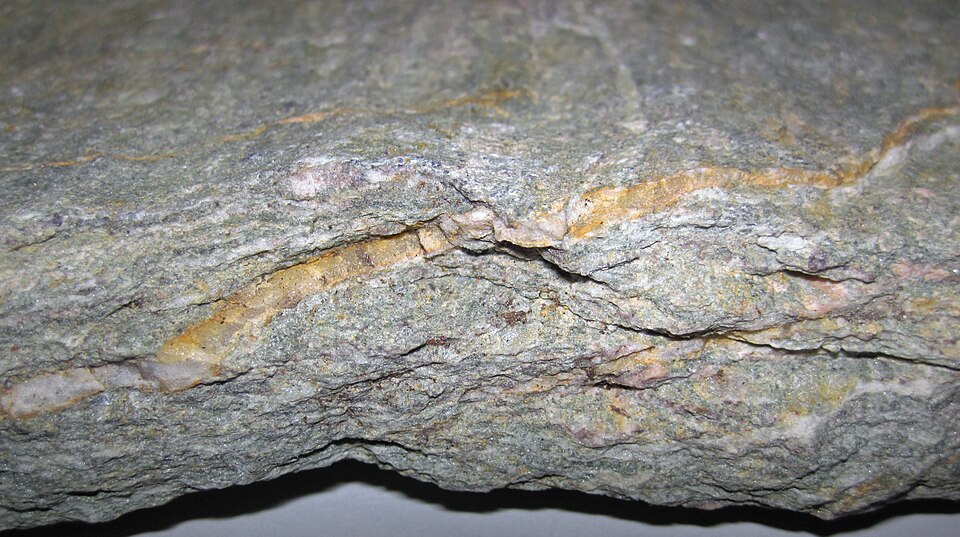
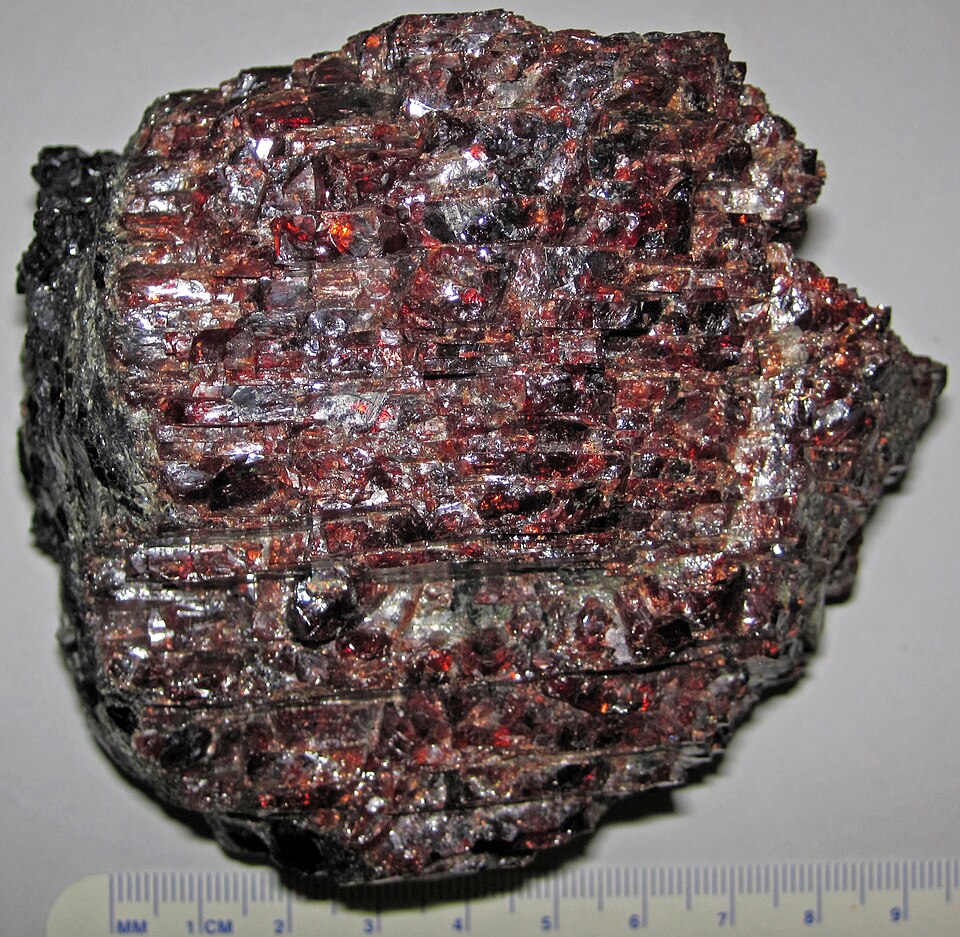
Phyllonite is a fine-grained, mica-rich fault rock formed by intense shearing and dynamic recrystallization along ductile fault zones. Unlike brittle cataclasite, phyllonite forms at greater depth and temperature where rocks deform plastically, producing a silky, phyllite-like texture with strong foliation.
white mica (muscovite/phengite), chlorite, quartz, feldspar (reduced), biotite, epidote
Alpine Fault (New Zealand), Moine Thrust Zone (Scotland), Appalachian shear zones (USA), Scandinavian Caledonides, Himalayan thrust zones
3-5
The transition from cataclasite (shallow, brittle) to phyllonite (deep, ductile) along a single fault zone records the depth at which rock behavior changes from breaking like glass to flowing like putty — the brittle-ductile transition.
Test Your Knowledge
What does the presence of phyllonite instead of cataclasite along a fault zone indicate about the depth and conditions of deformation?
Photo Attribution
Author: James St. John
License: CC BY 2.0
Related Specimens
Want to identify rocks yourself?