Stylolitic Limestone
“Limestone with pressure-dissolved seams”
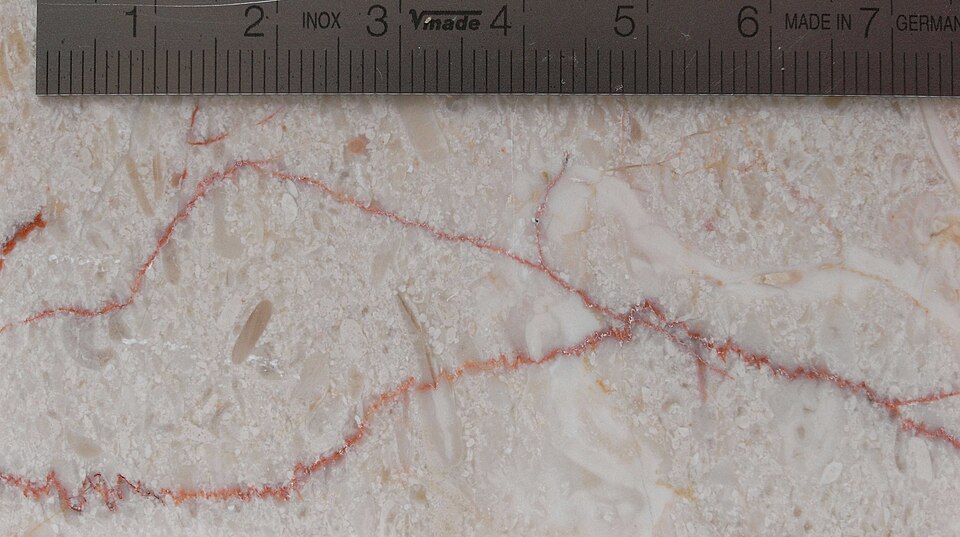
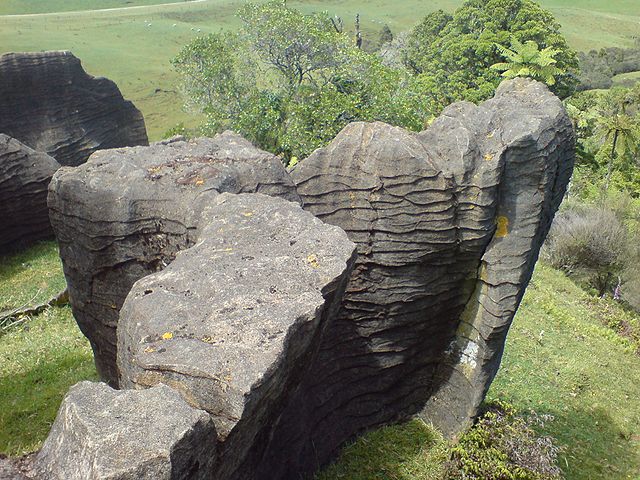
Stylolitic limestone contains distinctive irregular, jagged seams called stylolites — surfaces formed when the overburden pressure of burial caused calcium carbonate to dissolve at points of contact, leaving behind thin residues of insoluble clay and iron oxide. These zigzag lines record enormous volumes of dissolved rock.
calcite, clay residue along stylolites, iron oxides, quartz (minor), fossil fragments
Indiana (USA — Salem Limestone), Jura Mountains, Solnhofen (Germany), Cretaceous limestones worldwide, Persian Gulf region
3-4
Studies of stylolites suggest that enormous thicknesses of limestone have simply disappeared through pressure dissolution — in some formations, up to 40% of the original rock was dissolved away at stylolite surfaces.
Test Your Knowledge
What process creates stylolite surfaces in limestone?
Related Specimens
Want to identify rocks yourself?